Why Your Car Paint Does Not Quite Match After a Repair
When you pick up your vehicle from the body shop, the last thing you want to see is a slightly different shade of color on your newly repaired door. Many vehicle owners assume that fixing a scratch or replacing a panel is simply a matter of looking up the factory paint code and spraying it on. The reality is far more complicated.
Modern automotive paint is a highly engineered chemical system. Achieving a seamless and invisible repair requires specialized training, advanced technology, and a deep understanding of how light interacts with different surfaces. When a shop cuts corners on the repair of existing bodywork, the final finish will almost always reveal the shortcut.
Factory Paint Fading and UV Exposure
Your car begins aging the moment it rolls off the assembly line. Exposure to the sun, harsh weather, and environmental contaminants causes the original factory paint to fade gradually over time. This means the paint code printed on your door jamb no longer represents the exact color of your vehicle today.
If a technician simply mixes a fresh batch of paint using the factory code, the new paint will look significantly brighter and richer than the surrounding panels. To avoid this mismatch, a top tier shop must adjust the formula to match the current weathered state of your vehicle, not the day it was manufactured in the factory.
The Science of Metamerism in Auto Colors
Here is a scenario that frustrates many drivers: your repaired bumper looks perfectly matched when you inspect it under the fluorescent lights of the body shop, but it looks like a completely different shade when you park it outside in natural sunlight. This phenomenon is called metamerism. It occurs when two colors appear to match under one light source but differ under another.
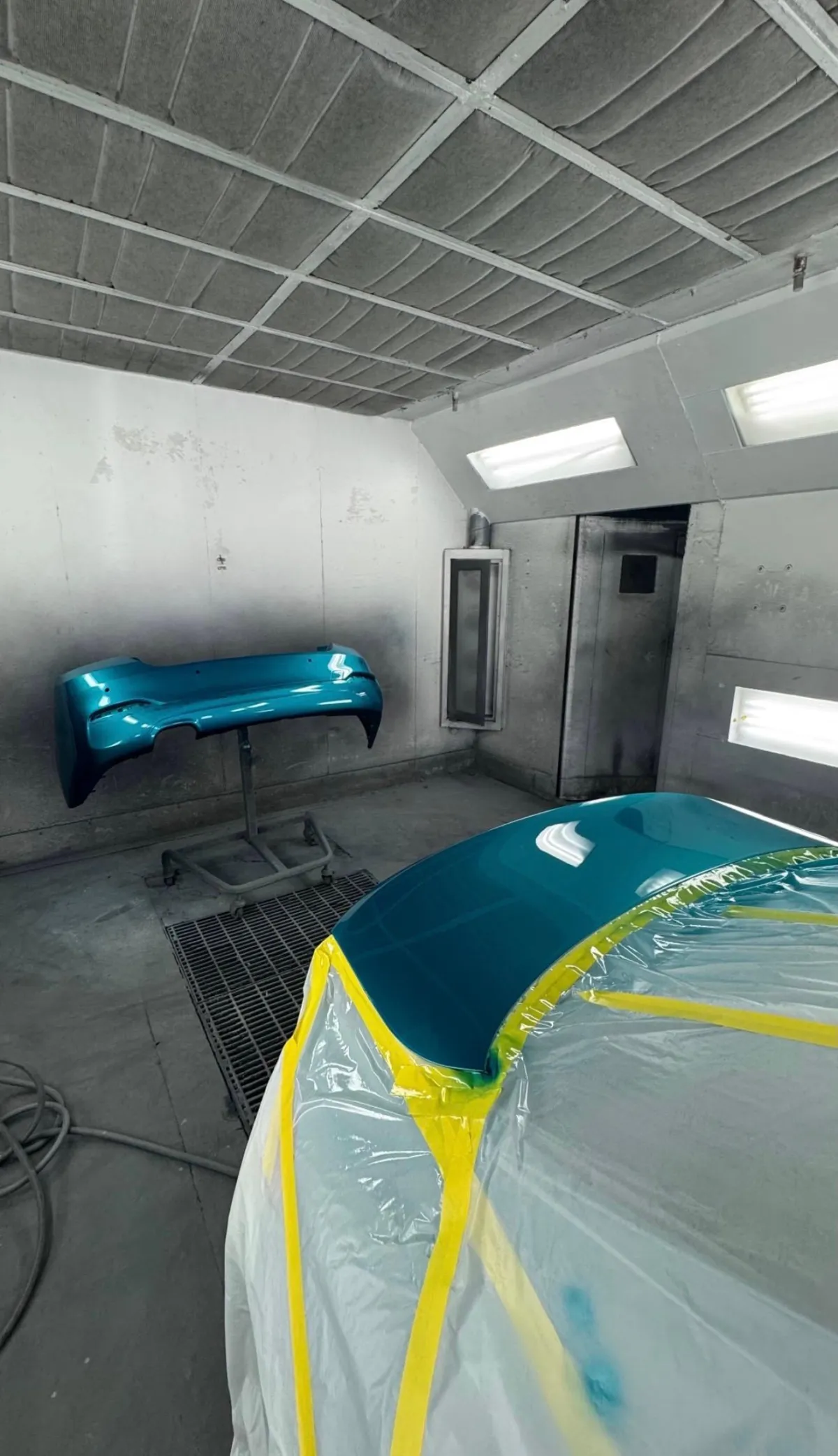
High quality auto paint facilities use specialized multi spectrum lighting in their spray booths to replicate various lighting conditions. They ensure the color looks correct whether you are driving under streetlights at night or in direct sunlight at noon.
How Substrate Materials Alter Paint Appearance
Have you ever noticed that the plastic bumpers on a brand new car sometimes look slightly different than the metal fenders, even on the showroom floor? This is due to the substrate, or the underlying material.
Paint behaves differently when applied to plastic, aluminum, or steel. These materials absorb and reflect heat differently during the curing process. This can subtly shift the final color and the way the metallic flakes lay on the surface. A skilled technician understands these material differences and adjusts their application techniques to ensure consistency across the entire vehicle, regardless of the underlying substrate material.
The Flop Angle in Metallic and Pearl Finishes
Modern vehicles frequently feature metallic, pearlescent, or tri-coat finishes. These paints contain tiny flakes of metal or mica that reflect light and give the car a sparkling effect. The flop angle refers to how the color changes depending on the angle from which you view it.
If a technician applies the paint with too much or too little air pressure, or sprays from the wrong distance, the metallic flakes will lay down at a different angle than the factory finish. As a result, the paint might match when viewed straight on, but look drastically darker or lighter when viewed from the side. Matching the flop angle is one of the most challenging aspects of automotive refinishing.
Utilizing Spectrophotometers for Computer Matching
Gone are the days of mixing paint entirely by the naked eye.
Today, the best collision centers use a specialized device called a spectrophotometer. This handheld computer is placed directly onto the adjacent panels of your car to take a precise digital reading of the current color. The spectrophotometer analyzes the exact hue, value, and metallic flake size. It then connects to an extensive database to generate a custom micro adjusted paint formula.
This technology is absolutely crucial for dealing with the complex variations in modern finishes and provides the reliable foundation for an accurate color match before the very first drop of paint is sprayed.
The Importance of Spray Out Panels
Even with advanced computer matching, a professional painter will never apply the color directly to your car without testing it first.
They create what are known in the industry as spray out panels. The technician sprays the custom mixed paint onto a small test card, applying the exact number of base coats and clear coats that will be used on the vehicle. Once dried, they hold this test card against the car under various lighting conditions to verify the color match and the metallic flop angle. If it is not absolutely perfect, they adjust the formula and create a new test card. This meticulous process ensures accuracy before the final application begins.
Blending Paint Into Adjacent Panels
The final secret to an invisible repair is a technique called blending.
Even with a perfect custom paint mix, painting a single panel edge to edge will often result in a visible transition line between the new and old paint. To prevent this, the technician extends the new color slightly into the undamaged adjacent panels, gradually fading it out. The entire area, both the repaired panel and the blended panels, is then covered in a continuous layer of clear coat. This creates a seamless optical illusion. Shops that utilize an advanced three-stage paint process understand that proper blending is the only way to guarantee a flawless and uniform result.
Choosing the Right Auto Body Shop
Avoiding a mismatched paint job comes down to selecting a facility that invests in the right technology and rigorous training. When evaluating a body shop, ask specific questions about their color matching process.
Do they use a digital spectrophotometer?
Do they perform physical spray outs?
Do they blend adjacent panels as a standard practice on every job?
A facility that answers yes to these questions is far more likely to return your vehicle looking exactly as it did before the accident. Remember that high quality paintwork takes considerable time and deep expertise. Prioritizing precision over a quick turnaround is the absolute best way to protect the aesthetic appearance and overall financial value of your vehicle.
Protecting Your New Paint Job
Once your vehicle is returned with a perfectly matched finish, you need to protect that investment.
Freshly applied clear coat requires time to fully cure and harden. During the first thirty days, you should avoid automatic car washes with stiff brushes or harsh chemical cleaners. Hand washing your car with a mild automotive soap and a microfiber towel is the safest method. Additionally, wait at least sixty days before applying any wax or ceramic coating. This allows the paint solvents to fully outgas and evaporate. Proper aftercare ensures that your flawless new finish remains bright and completely protected from environmental damage for years to come.
Have a question?
Get in touch with us!

Family-owned - Since 1972 - three generations; long-standing West LA shop with 750+ 5-star reviews across Google and Yelp

OEM Parts whenever possible - PPG paint + advanced color matching, and straight talk when insurance proposes alternatives

Trained technicians - I-CAR, aluminum structure and carbon fiber certified technicians built around doing repairs correctly

Convenient Location - Just off the 10 freeway, between Barrington and Bundy.


© 2026. Howard Brown & Sons Auto Body. All Rights Reserved.